Helping Kids Learn Math
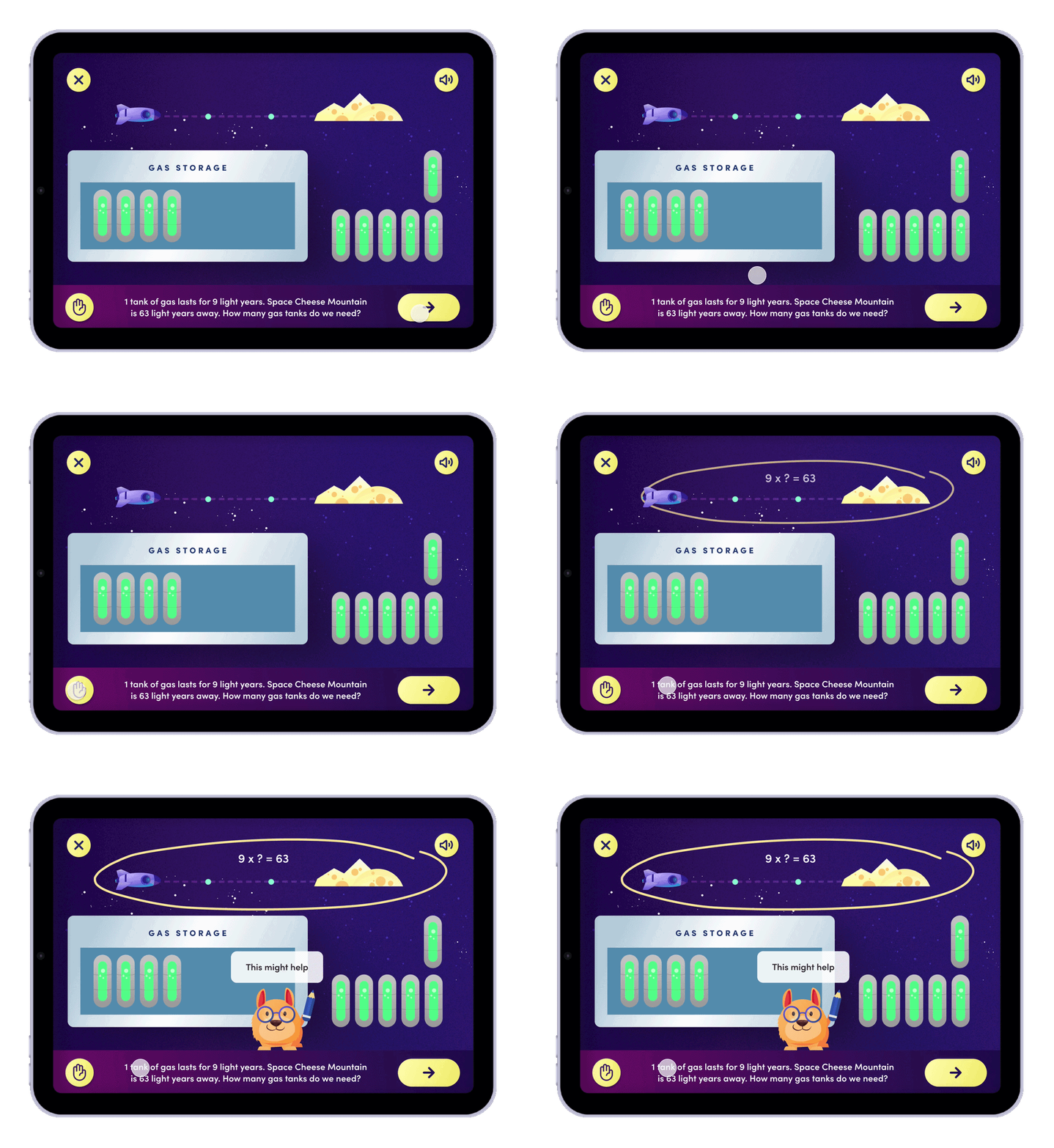
ALEKS by McGraw Hill is a supplemental math learning tool that uses machine learning to create adaptive learning paths for students. Their current product only extends from 3rd to 12th grade. ALEKS sought to re-imagine the experience for younger students and secure internal funding to develop a K-3 supplemental learning tool that would position McGraw Hill as a market leader.
Client
McGraw Hill
Role
Project Lead,
Interaction Designer
Team
Executive Design Director (Anto C.), Program Manager (Eunice C.), Visual Designer (Joyce L.), Interaction Designers (Curtis W., Ollie R.)
Turning to experts for guidance
Typically, we would conduct generative user research directly with the target audience directly. However—as we were designing for young children— we decided to start the project by interviewing K-3 educators and early childhood education experts instead.
From our research, we uncovered 3 key user needs to keep in mind in order to develop an engaging and intuitive math learning tool:
1. Math is abstract for many students and math materials often remain too conceptual to be easily grasped
2. Young students have short attention spans and require variety to stay engaged
3. Learning tools often don't tailor content for individual students and often focus on rote practice rather than providing instruction or actionable feedback.
Connecting [math] to the real world experience is super important...teachers never explained me the “why” with math. Math is in baking, sewing, walking...so in many ways, math is all around.
— Child Education Expert
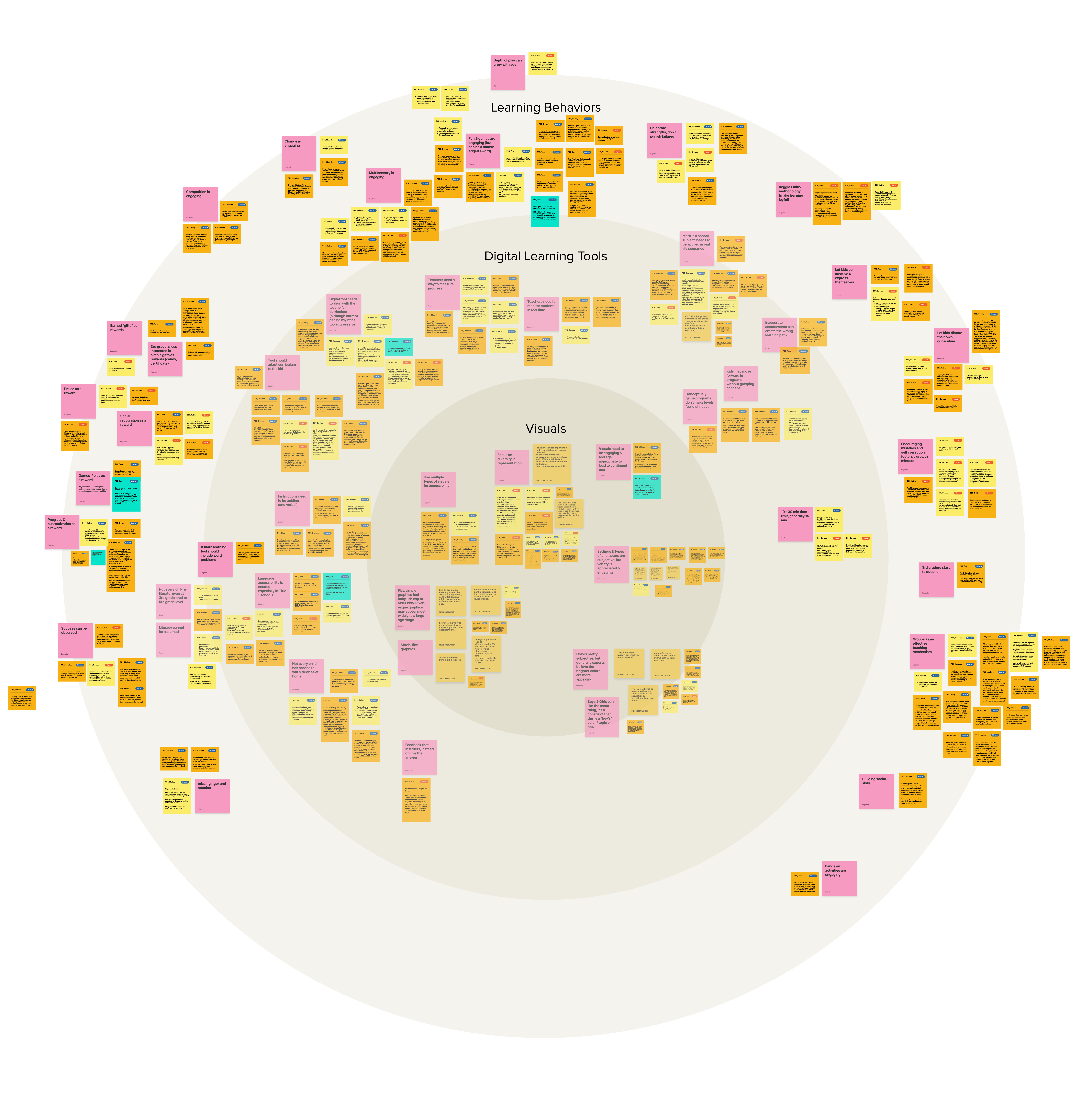
We spoke to 9 educators and 3 childhood education experts. Within the 90 minute interviews with the research participants, we were able to dive into learning behaviors, digital learning tools, as well as go through stimuli to determine what visual styles would resonate with both teachers and students.
Bringing two concepts into user research with children
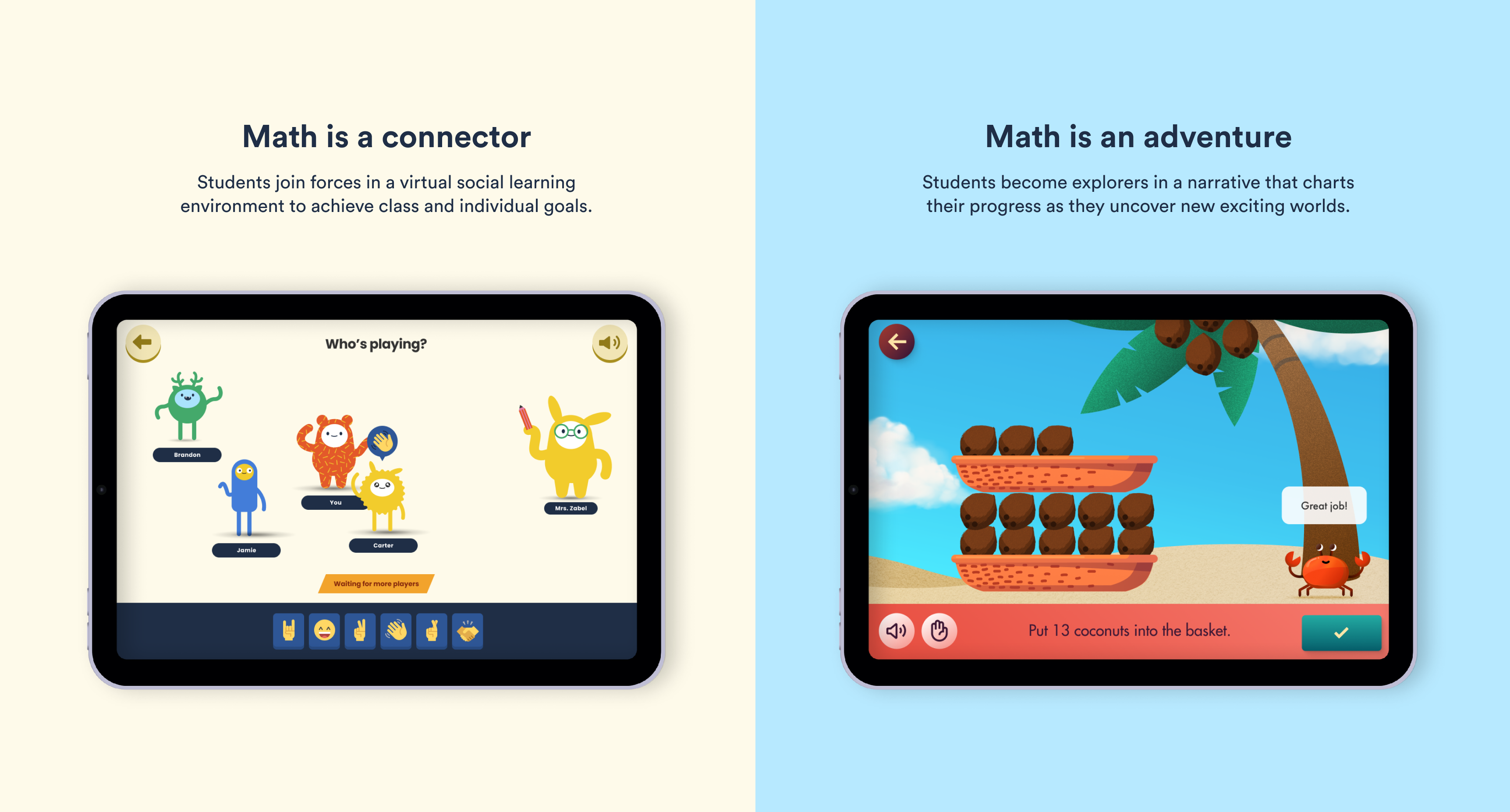
After going to the drawing board, we came up with 2 separate concepts that we brought into user testing with kids in the K-3 age range.
In total, we spoke to 19 children with either their parent or teacher present. Each session lasted 60 minutes and we spent time having the child interact with a tablet prototype for both concepts, gauging their feedback and allowing them to compare both ideas.
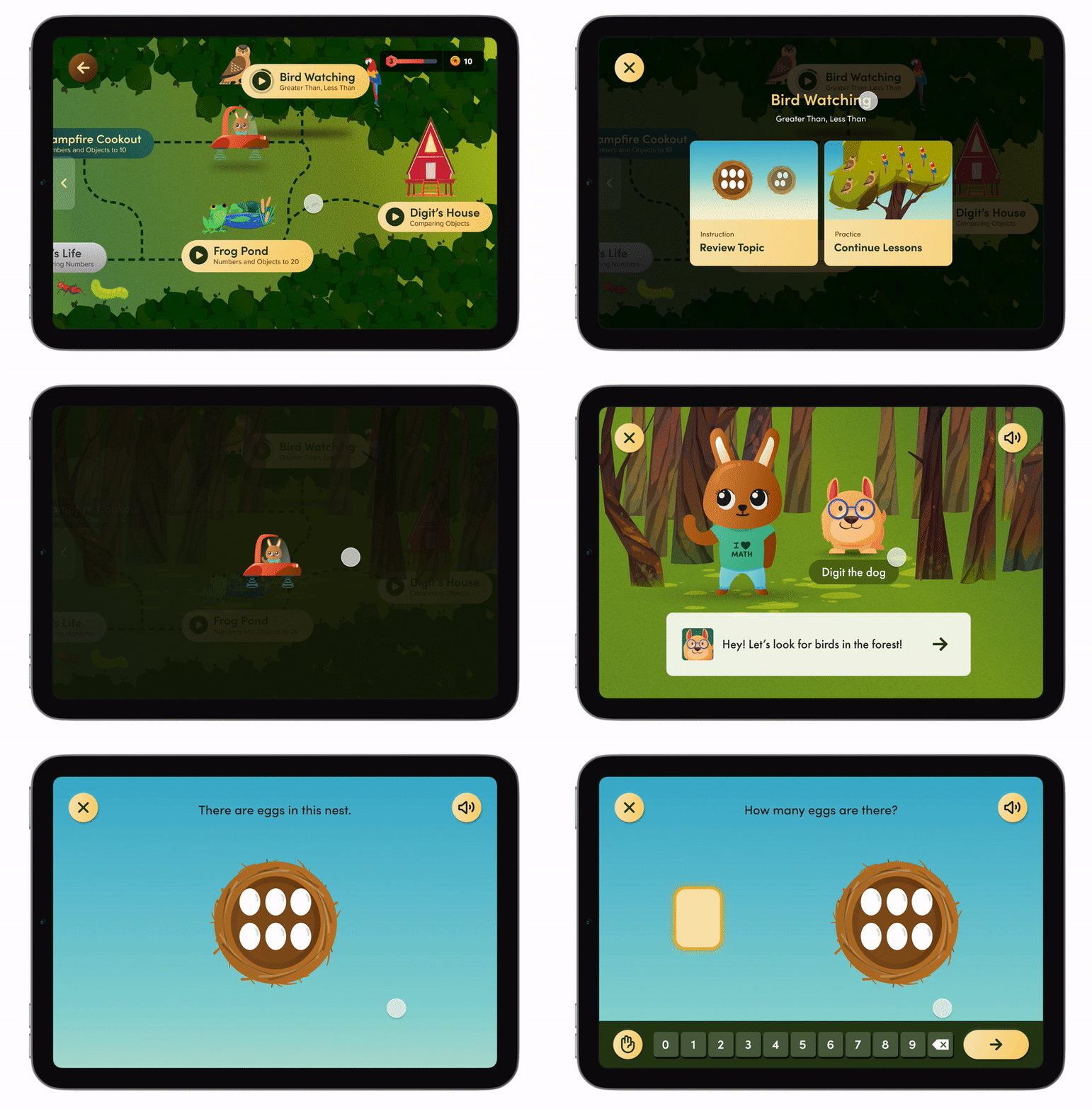
Coming out the testing sessions, we ultimately decided to develop the "Adventure" concept further as it was higher received by both students and teachers. However, we did end up taking the most resonant elements from Connector to build into the Adventure concept, notably allowing students to earn rewards from completing math lessons that they could spend on personalizing their avatar to interact with classmates.
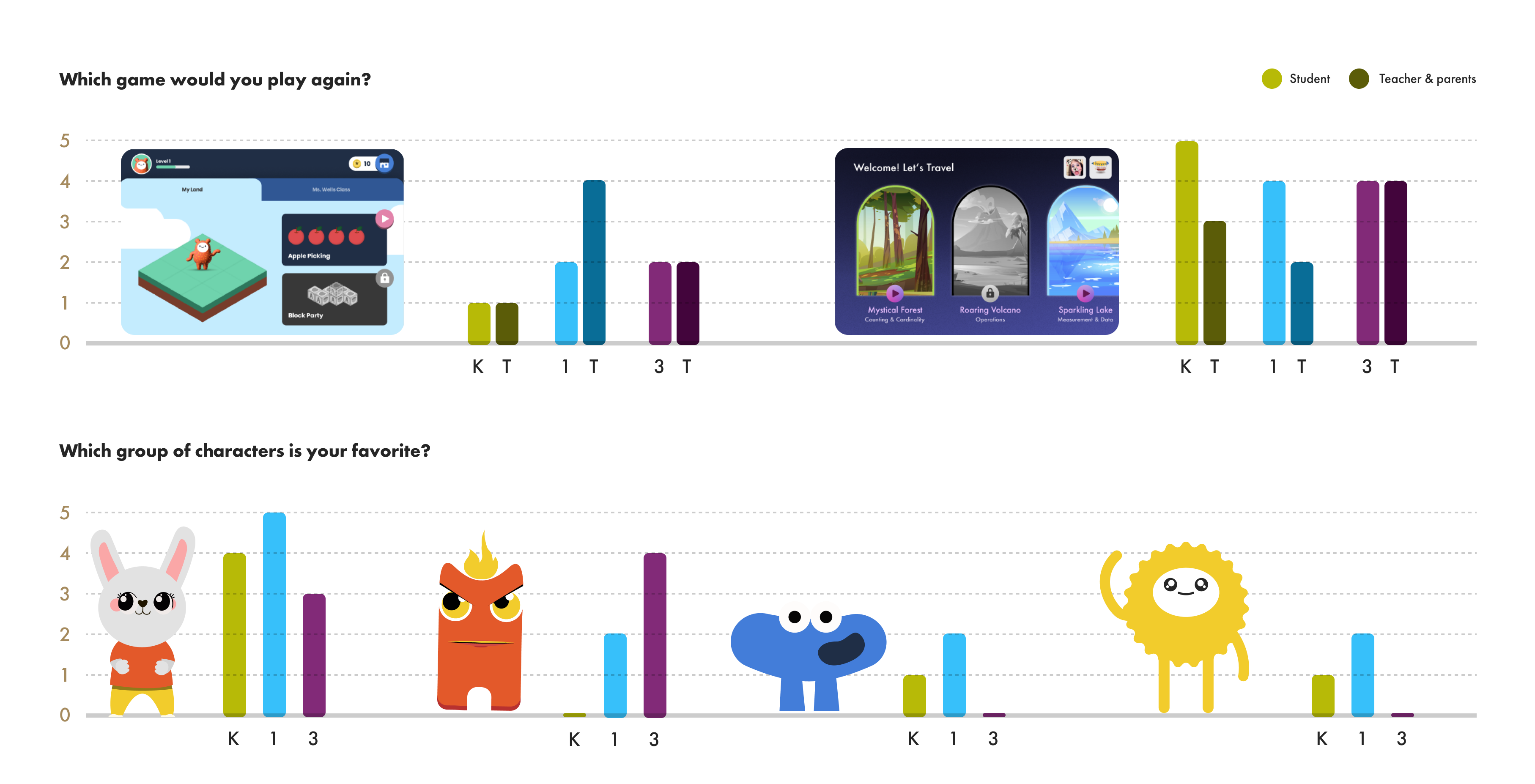
We kept track of what each student mentioned in their research study to better understand which concepts and characters the students were most drawn to. From our research, we determined that the Adventure concept and animal characters were highest received by students and teachers.
Setting the stage for implementation
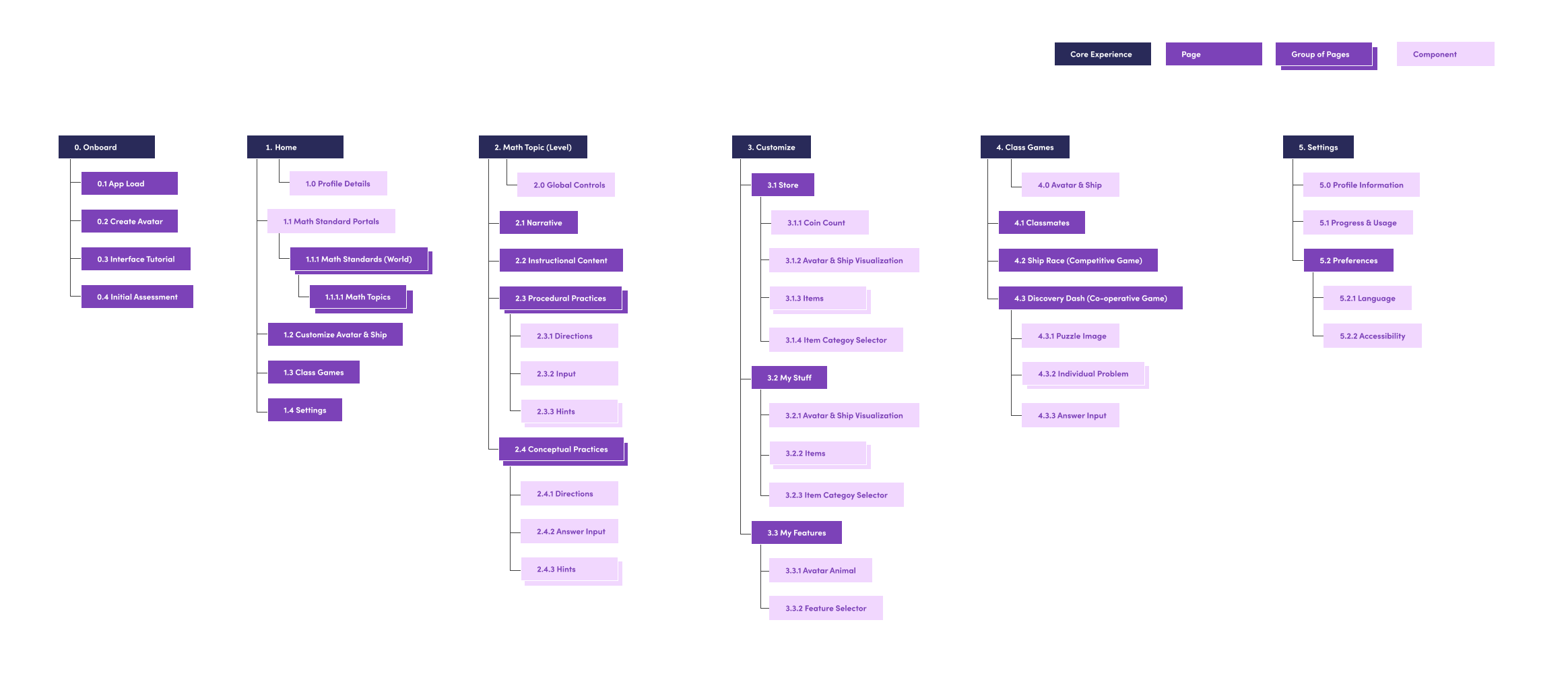
With our concepts validated, we moved into the structural phase of the project. First we worked on developing a comprehensive journey map to capture the end-to-end experience across both student and teacher flows, and building out the information architecture to ensure the platform could scale gracefully across grade levels. These artifacts became the foundation that guided the development team through build, ensuring the playful, personalized experience we'd designed for held up in implementation.
Outcome
The concepts we developed were finalized and handed off for development. ALEKS Adventure launched in 2026 as a standards-aligned, adaptive math platform for grades K–3 — with grades 4 and 5 planned for later that year. The product is now live and available through McGraw Hill, bringing the research-grounded, AI-driven learning experience we designed to classrooms across the country.